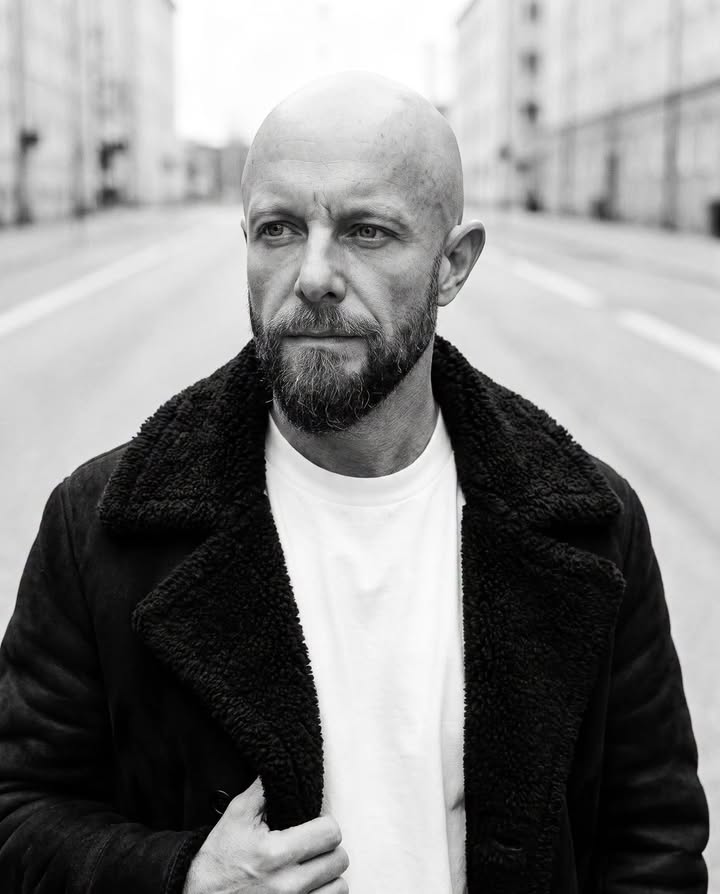
I have translated this important article from my husband Thomas Finn ⬇️
Well. I’ve been away from here for a couple of days. There were things in the real world that needed handling. Some serious. Some fun. Some confusing. And plenty of good things.
Several of you have reached out, some of you worried, asking if something was wrong.
Nothing is. When I step away from this place, as I have these past few days, it’s usually just to survey the terrain. To understand what’s been working and what hasn’t. Where I’m pushing too hard, and where I’m not pushing nearly hard enough. That can be difficult to see and feel when, day after day, you follow whatever flows through you and put it into words without giving it much thought.
And every time I do that, every time I take a few steps back and look at the whole thing from a distance, I see the same thing.
I write about a lot of things here. Islam and the West. The left. Rasmus. Mette. The Church. The Jews. All the issues that come along and that I can’t leave alone. And from a distance, it could certainly look like a man with a lot of opinions about a lot of things - and that’s also what some of the people you might call “my critics” see. And fair enough, because that’s what it looks like if you only look at the surface.
But that’s not what it is.
It’s one question, asked again and again about different issues. And I’ve spent these past few days trying to figure out whether I’ve ever asked that question plainly, without an issue in front of it, without a news story to hang it on, without Rasmus or Mette, some idiotic proposal out of Brussels or a city council decision in Birmingham as the occasion.
I don’t think I have. I’ve come at it sideways in hundreds of posts. I’ve never asked it head-on.
The question is - what is True?
Not what I think. Not what I believe. But what IS, before any of us has said anything about it. And what happens to a Human Being and a people when they move away from it, no matter how good their reasons are.
So that’s what’s coming now. It’s long, longer than anything I’ve written here before, and that’s deliberate, because it’s what everything else I write rests on. So if you’ve been reading along for a while and have sometimes wondered, WHERE THE F*** is he actually going with all this, here’s your answer. If you’re new to this page, this is the right place to start.
And if you don’t have time today, save it. It isn’t going anywhere. That’s actually the whole point.
Stay tuned.
….
There’s a man standing in a room in Jerusalem on a Friday morning some two thousand years ago, asking the question the entire West is still asking.
The man’s name is Pontius Pilate. He’s a Roman governor, he holds the power of life and death in the province, and a prisoner has been brought before him whom the priests want executed. He questions him. The prisoner says he came into the world to bear witness to the Truth, and that everyone who is of the Truth hears his voice.
And Pilate answers - What is Truth?
Then he walks out.
Try staying there for a moment. He isn’t asking because he wants an answer. John states it matter-of-factly - he said this, and then he went out to those waiting outside. The question hangs in the room, and the man who asked it is already on his way out the door. He has the Truth standing before him, bound, in a borrowed room, and he asks what it is, and doesn’t wait for the answer.
I don’t know a better description of where we stand today.
We ask the question all the time. What is Truth, who owns it, isn’t it just your truth and my truth, isn’t it a position of power, a construct, a privilege? We ask it in classrooms and on debate shows and in every single comment thread, and we ask it exactly the way Pilate did. As a goodbye. As a way of leaving the room before anything in that room is allowed to make a claim on us.
This post is an attempt to stay instead.
It’s going to be long. That’s deliberate. I often capitalize Truth, and several of you have asked what exactly I mean by it. Whether it’s an opinion. Whether it’s something Christian I’m trying to sneak in through the back door. Some people think it’s ridiculous. Or think it’s a trick or a trap. It isn’t.
It’s the front door. So let’s walk through it.
….
Let’s start with the word, because it’s more interesting than you might think.
In Danish, we say Sand. Sandt. Sandheden. True. What is true. The Truth. We use it as though it means correct, as in an audit - an Excel spreadsheet - does it add up or doesn’t it? But the word is much older than accounting, and it meant something else. Sand comes from the Old Norse “sannr,” and that word goes back to the same root as the verb “to be.” What is true originally means that which is. That which exists. What is there, whether anyone says so or not.
Notice what that does to the sentence. When we ask what is true, we aren’t asking who’s right. We’re asking what is. Because the Truth is not a claim about Reality that has managed to win a majority. The Truth is Reality itself, before anyone has said anything about it.
The same thing happens if you turn to Hebrew, the language in which the first two-thirds of the Bible were written. The word there is “emet,” and it comes from a root meaning firm, supporting, something you can lean on. It’s the root we still say out loud every time we say “amen.” Amen doesn’t mean “end of prayer.” It means - “this stands firm.” It holds.
Truth in Hebrew isn’t something that’s correct. It’s something that holds you up.
And in Greek, the language the Gospels were written in, Truth is “aletheia,” a word formed by placing a negation before the word for forgetfulness and concealment. Truth is “the unconcealed.” What has come into the light. The Greeks didn’t imagine Truth as something you invent. They imagined it as something already there, waiting to be uncovered.
Three languages, three different peoples, and they point to the same place. Truth is what IS. What holds. What emerges when you remove whatever is covering it.
Hold on to that. That’s the entire rest of this text in three sentences.
Because now notice what it does to the phrase we’ve all learned to use over the past few decades.
My Truth. Your Truth.
It sounds open-minded, and it’s kindly meant, but try putting the old meaning back in. “My that-which-is.” “Your that-which-is.” It doesn’t work.
What is isn’t mine or yours, any more than the weather is. What’s mine is the layer I put on top. My experience of it. My story about it. And that’s real enough, and of course it deserves to be respected, to some extent, but it isn’t the Truth about the thing itself. It’s the Truth about me. When we say “my Truth,” what we really mean is “my view.” And a view is not the landscape.
….
So we have to go ALL the way back. To BEFORE.
Genesis doesn’t begin with the Human Being. It begins with a deep. The earth was without form and void, it says, and darkness was over the face of the deep, and the Spirit of God hovered over the waters. What’s being described isn’t nothing. It’s something without order. Chaos, the Greeks would say. A place where nothing has yet been separated from anything else, where light and darkness, sea and land, up and down aren’t yet anything, because they haven’t been separated.
And then it happens. God speaks. Let there be light. And there was light.
Try noticing what it doesn’t say. It doesn’t say God fought the deep. It doesn’t say he persuaded it or explained it or took a vote.
He spoke, and what he spoke came to be.
And now notice what he does with the word, day after day. He separates. Light from darkness, the waters above from the waters below, sea from land, day from night, kind from kind. And every time he separates something out, he gives it a name. Day. Night. Sky. Earth. Sea. Creation in the Bible isn’t something appearing out of nothing with a wave of a magic wand. Creation is what lay in one disordered deep being separated and named, so that it can be what it is. And all of it happens through a word.
That’s what I mean when I write that Reality is created. I don’t just mean it has a beginning. I mean it has an order, and that order was there before us. Before you were born, before your parents, before your language, before your culture, before the first ideology, before the first religion, before anyone had an opinion about anything - Reality was already there, and it was ordered, and it was already at work.
That’s what I mean by what is already there and at work before everything else.
Think of it this way. You can take everything you think you know and put it in a pile. What you were told in school. What your mother said. What you’ve read, seen, heard, argued about. Your intuitions. Your wounds. What you want to be true because it would make life easier. What you’re afraid is true because it would make life harder. All those layers. And then you can ask - What’s left if you lift off every layer?
The answer isn’t nothing. The answer is Reality.
It was there before the layers went on, and it’s there when they’re lifted off. It’s what the layers are resting on. It’s what they conceal.
And that’s what is true. Not the layers. That.
I know this sounds abstract, so let me give you an image I’ll be using the rest of the way, because it’s the only one that’s ever been good enough for me.
The plumb line.
A mason always carries a plumb line. It’s a string with a weight at the end, a piece of metal, and it’s probably the most primitive tool there is.
You hold it up, and it hangs. Vertically.
That’s all. It doesn’t argue. It has no opinion about the wall. It has no aesthetic preferences, no politics, no sympathy for whether the mason has had a rough day. It just hangs straight, because something in Reality pulls it downward, and that “something” has been pulling downward since before the first wall was built.
The mason doesn’t create the plumb line. He discovers it. Or rather, he discovers what the plumb line reveals - the direction that was already there. And his entire craft consists of building so that what he builds lines up with what was already there.
He can choose not to. That’s the crucial part. He can build crooked. Nobody stops him. The plumb line doesn’t shout. It just hangs, and he can choose to look at it or not. But if he builds crooked, there comes a time when the wall itself tells him he did. Not with words. It falls.
Boom.
“You didn’t build according to Reality’s rules.”
That’s how Reality works. It’s the plumb line. It’s what hangs straight, regardless of what we build. And everything we build - our ideas, our societies, our self-images, our explanations - stands or falls by one measure: whether it lines up with what was there before.
….
And then comes what makes Christianity something other than a philosophy.
John begins his Gospel by going back to the same place as Genesis. In the beginning. But he writes it differently.
In the beginning was the Word, he writes, and the Word was with God, and the Word was God. All things came into being through him.
The Greek word he uses is Logos.
Logos was a word the Greeks had already been using for five hundred years when John took it up. It meant word, but it also meant reason, order, principle, the coherence that makes the world hold together instead of falling apart. Philosophers had been searching for it for generations. What gives order. What makes there be laws in nature instead of nothing but chance. What makes two and two equal four in Athens and in Babylon alike.
And John says - Yes. Yes, it exists. It’s what brought everything into being. And then he says what no Greek philosopher had dared to say.
And the Word became flesh and dwelt among us.
That’s what’s happening in that room in Jerusalem on the Friday morning where we began. What ordered the deep stands bound before an official. What was there before everything else has been given a face, a body, a voice, and is being asked what Truth is.
And four chapters earlier, in that same Gospel, he has already answered the question himself, before it was asked.
I am the Way, the Truth, and the Life.
Notice what he doesn’t say. He doesn’t say - I know the Truth. He doesn’t say - I have a teaching that is true.
He says - I am it. The Truth.
It’s the most radical thing anyone has ever said about what Truth is, and it’s why I capitalize it. Because if the Truth is a person, then it isn’t something you can own. You can’t hold a patent on a person. You can’t arrive at a person by calculation. You can’t settle a person by a vote. You can meet a person. You can recognize a person. You can turn toward or away from a person.
Augustine, whom we’ll return to, opens his Confessions with a sentence people have been reading aloud for sixteen hundred years, because no one has managed to say it better.
“You have made us for yourself,” he writes, addressing God, “and our heart is restless until it rests in you.”
That’s a sentence you can only write about a person. You don’t rest in an equation. You don’t rest in a correct statement. You rest in someone.
And that’s exactly what Pilate doesn’t do. He turns away. He doesn’t have the Truth before him as a sentence he can reject with a better sentence. He has it before him as a Human Being, and he leaves.
I realize this is where many of you get off, and of course that’s perfectly fine. I’m not asking you to believe it. I’m asking you to understand what’s being claimed, because it’s something different from what people usually say about Christianity.
The claim isn’t that an old book is right. The claim is that what ordered the universe is of such a nature that it can be encountered. That at its deepest level, Reality isn’t an equation, but a face. That if you follow the plumb line all the way down, it doesn’t end in a piece of metal, but in someone looking at you.
You can call that whatever you want. But that’s what it says.
….
Now to the Lie. Because you can only understand it once you’ve understood what came before.
If the Truth is what is, then the Lie isn’t simply the opposite of the Truth. It’s worse than that. The Lie is what is not, but is said to be.
Augustine, the bishop in North Africa around the year 400, probably one of the wisest men who ever lived, spent many years trying to understand what Evil actually is. As a young man, he was a Manichaean, a follower of a teaching that said there are two equally powerful forces in the world, one good and one evil, and that they are at war. He abandoned that idea, and what he arrived at is still the clearest account I’ve encountered.
Evil, he said, isn’t a thing. It has no substance of its own. It’s an absence, just as Darkness is the absence of Light and cold is the absence of heat. You can’t turn on the Darkness. You can only turn off the Light.
The Lie is like that. It has no reality of its own. It borrows all its reality from the Truth, because it can only exist as a claim about something that is. A lie about nothing isn’t a lie, it’s just noise. The Lie needs something real to lay itself over, or it can’t stand.
And that means something very practical, something anyone who has ever lied knows in their own body.
The Lie has to be held up.
The Truth doesn’t. You can say something true once and move on and forget it, and it will still be true ten years from now, because you weren’t what was holding it up. Reality was. But if you lie, you’ve taken on a job from that moment on. You have to remember what you said. You have to remember who you said it to. You have to watch whether anyone gets too close. You have to come up with the next lie to cover the first, and a third to cover the other two. You have to build an entire structure, and that structure has no foundation in anything that is, so you are the foundation. All the time. With your attention, your anxiety, your energy.
That’s what I mean when I say the Lie moves the Human Being out of Reality. Not as punishment. As a mechanism. The person who lies has to live inside what he’s built, because it falls if he walks away. And so that’s where he lives, inside the structure, instead of in Reality, and he becomes more and more afraid of the place he came from - the Truth - because it’s the only place that can bring him down.
And something happens inside him that’s worse than the anxiety.
He becomes two people inside.
One is the one who knows what is, because of course he knows - that’s how he can lie about it. And then there’s the other one, who says something else.
Those two can’t live together in peace, so he builds a wall between them, and that wall has to be held up too. The Greek word for the devil, diabolos, means the one who casts apart. The one who divides. So it’s no accident that this is the word that stuck. Because that’s what the Lie does to a Human Being before it does anything at all to the world.
It divides them.
Between what they see and what they say. Between what they are and what they show.
And a divided Human Being cannot rest, because there is ALWAYS one half standing guard over the other.
Orwell described it precisely in his book 1984.
The ultimate expression of the Party’s power isn’t getting you to say that 2 + 2 = 5. It’s getting you to believe it while you’re looking at four fingers. It’s getting you to move so completely into the structure that you can no longer see the plumb line, even when it’s hanging right in front of you.
Jesus says something about the Lie so harsh that most preachers steer around it. It’s also in John, chapter eight, in an argument with some of those listening to him.
He says, and notice the wording here, that their father is the devil. And then he describes the devil in two ways in the same breath.
He was a murderer from the beginning, and he does not stand in the Truth, because there is no Truth in him. When he lies, he speaks from what is his own, for he is a Liar and the Father of Lies.
Murderer and Liar. In the same verse. That’s no accident, and this is where I have to bring a man into the text who has meant more to my own understanding than almost anyone else. Yes, I know, it’s a lot of names for a Friday. But try to stay with me.
…
René Girard was French, a literary scholar, he lived in America for most of his life and died in 2015. He didn’t start out as a believer either. He started by reading novels, Cervantes, Stendhal, Dostoevsky, and he discovered something about the Human Being that the novelists had seen and that no science had managed to grasp.
That we don’t know what we want. That we want what others want. That our desire is borrowed, copied, caught from others.
And that when many people want the same thing because they’re copying one another, they end up in conflict, and the conflict grows until it threatens to tear the entire group apart.
And then he found the mechanism that saves the group. It’s always the same, in every culture, in every myth, from the Aztecs to the Greeks to the village. The group finds one person. Someone who stands out. A stranger, a cripple, someone too beautiful or too ugly or too rich or who speaks the wrong way. And everyone who was about to kill one another turns together against that one person - and then they kill him instead. And peace returns. And because peace returns, he must have been guilty. He must have been the cause. And because he could bring peace by dying, he must have been something special. Sacred.
That, Girard says, is where religion comes from.
Archaic religion. The temple, the sacrifice, the ritual, the taboo. It’s all machinery that repeats the first murder in a controlled way, so the group can keep discharging its violence without falling apart. And the myth, the story told afterward, always takes the same form - The victim was guilty. The gods wanted it. “It was necessary.”
The myth is the Lie about the Victim. That’s the point. The Murder and the Lie aren’t two separate things. The Murder can only work if everyone believes the Lie that the person who was killed deserved it. Remove the Lie, and the Murder becomes visible for what it is, and then it can no longer create peace. It can only create shame.
A murderer from the beginning. The Father of Lies. Same verse.
And then Girard read the Gospels, and he saw something that made him a Christian, even though he hadn’t been looking for that either. He saw that the Gospels tell exactly the same story as all the myths. A city in crisis. A man who stands out. A crowd turning against him. The priests and the authorities agreeing for once. The people shouting. An execution meant to restore order.
But the Gospels tell it from the wrong side. For the first time, they tell it from the victim’s side. And they say what no myth had ever said before -
He was innocent. The crowd was wrong. The peace that followed was a lie.
Girard said that changes everything. Because a mechanism that has been exposed no longer works. It only works as long as everyone believes the myth. From the moment there is a story in the world that insists the scapegoat was innocent, people can never again join together to kill someone with an entirely clear conscience. There will always be someone who knows the other story.
In Girard’s view, that’s the real reason the West has become the part of the world obsessed with victims. Where other cultures honor the victor, for two thousand years we’ve had an executed innocent man hanging on the wall in every room where decisions were made. That has done something to us. It has made it impossible for us to feel entirely at ease when we strike someone down.
That isn’t a weakness. It’s the best thing we have.
But hold on to the Lie. Because Girard gives us something we otherwise lack. He shows that the Lie isn’t just something individuals do to avoid discomfort. The Lie is a social force. It’s what holds a crowd together around a victim. It’s what makes a hundred people feel righteous while doing something terrible.
And it’s the same lie every time - that the person we turn against deserves it.
….
This is where it hurts, and this is where I have to write something some of you will take personally. I can’t decide that for you, but don’t. What I’m writing isn’t directed at you. It’s directed at a mechanism you and I are both caught in.
The Lie doesn’t have to be Evil to be a Lie.
That’s one of the hardest things for a modern, supposedly “empathetic” Human Being to understand, because we’ve been raised to judge by intention. Did he mean well? Then it must be good. Did it come from a warm place? Then it must be true.
That comes from confusing two things that have never had anything to do with each other - what we feel, and what is.
The feeling is real enough. That’s not what I’m saying. Your anger is real, your compassion is real, your anxiety is real. But the feeling only tells you something true about YOU. It doesn’t tell you anything about the world. And the moment you start using your feelings as the measure of what is true about the world, you’ve traded the plumb line for your own pulse.
Václav Havel, the Czech playwright who was imprisoned under communism and ended up as his country’s president, wrote an essay in 1978 that is still one of the best things I know on this subject.
He describes a greengrocer under communism. An ordinary man with a shop in Prague. One day he puts a sign in the window between the onions and the carrots, and the sign says -
Workers of the world, unite.
Why does he do it? Does he believe it? Has he thought about what it means?
The answer is no. No. He does it because the sign came with the goods from the wholesaler, and because everyone else has one too, and because he knows that if he doesn’t put it up, someone will notice. He does it to be left in peace.
And Havel says: Notice what the greengrocer is actually saying with that sign. He isn’t saying anything about workers. He’s saying: I’m afraid of the others, and I’m falling in line. But he can’t say that out loud, because it would be humiliating. So he says it in the language of ideology instead, and the ideology allows him to believe he’s doing something noble while doing something cowardly.
The same thing happened in Germany. Different signs. Different words.
That’s what an ideology is for, Havel says. It’s a bridge between the system and the individual Human Being that makes it possible for that person to live within the lie and still feel decent. It lets you pay your share toward keeping the structure standing and call it conviction.
Try changing the sign. Try putting a different slogan in the window, one from our own time, one you have some relationship to yourself. It can be anything. The point isn’t what it says. The point is that there are two questions you can ask about it, and we only ask one.
We ask: Does he mean well? We almost never ask: Is it true?
And that’s how a Well-Intentioned Lie works. It isn’t a Lie about a fact you can look up. It’s a lie about where you stand.
The greengrocer thinks he’s standing in his shop. He isn’t. He’s standing inside the structure. He’s moved a little way out of Reality, without noticing, for good reasons, for the sake of peace, and now he lives somewhere he has to keep holding up a sign that isn’t his, so he won’t be caught being who he is.
How many signs like that in refrigerated display cases, flags outside city halls, parades and demonstrations have we had in rotation over the past five years? Ten years? Twenty years?
Now multiply that by an entire people.
That’s what an ideology does on a large scale.
It takes a real feeling - a sense of justice, compassion, anger at injustice, a longing for belonging, all real, all good - and builds a structure on top of it that doesn’t line up with the plumb line. And because the feeling is real, the people living inside the structure can’t understand that the structure isn’t. They can feel the warmth. They can feel that they want what is good. And every time Reality sticks its head in and says what they’re building is crooked, it doesn’t register as information.
It registers as an Attack on the Good.
That’s why the great ideological catastrophes of the twentieth century were, for the most part, not committed by people who wanted Evil.
That’s the most important lesson of that century, and we have REFUSED to learn it. They were committed by people who wanted the Good so badly that they stopped checking whether it was True. And when it turned out not to be, when the fields were empty and the camps were full, it wasn’t the structure that was taken down. It was the people pointing to the plumb line. Because the structure had to be held up. And the only thing threatening it was Reality. The Truth.
Solzhenitsyn, who spent eight years in the camps, wrote afterward that the line between Good and Evil doesn’t run between states or classes or parties. It runs straight through every Human Heart. That’s what makes his testimony so unbearable. He doesn’t accuse anyone of being something he hasn’t been himself. He had been a committed young officer. He had had the sign in the window himself. And when he came out, his conclusion wasn’t political. It was the same as Havel’s.
Live not by lies.
Not - Fight the system.
Just - Don’t say what you know isn’t true. Don’t raise your hand for something you don’t believe in. Don’t keep holding up the sign.
It’s less than you think, and it’s more than most of us do.
And here Girard returns with the final twist, the one that hurts most of all. In his last major book, “I See Satan Fall Like Lightning,” he writes about something he calls “the modern concern for victims.”
He says - Look at what the Gospels have done to us. We always take the victim’s side now. We can’t help it. It’s the deepest Christian inheritance in the West, deeper than any church, and it’s there even in people who have never set foot in one.
But then he says - And look at what we do with it. We use it to find new scapegoats. We find the person who has victimized someone, and then we all turn against him together, and we feel completely righteous as we do it, because we’re doing it for the victim.
The old mechanism is back. The crowd, the one, the consensus, the peace afterward. Only now it speaks the language of the victim. That, Girard says, is the most sophisticated form of persecution that has ever existed, because it uses the very revelation that was supposed to make persecution impossible… as its alibi.
That’s the Well-Intentioned Lie in its purest form. It has borrowed everything most beautiful from the Truth, Compassion, Justice, Concern for the Weak, and uses it to build precisely the structure the Truth came to bring down.
And it has to be held up. Day and night. By all of us. With signs in the windows.
And now notice what happens to religion when it’s thrown out the front door. It comes back in through the back door, without the one thing that made it bearable.
When a people abandons what tore the curtain in two - I’ll come back to the curtain in a moment - it doesn’t build a world without curtains. It builds new ones. It needs somewhere to put its guilt, because guilt doesn’t disappear when you stop believing in God, it just changes address. So we get sin again, now under different names - your footprint, your heritage, your skin color, your sex, what you said in 2009.
We get purity codes again, about words you aren’t allowed to use and people you aren’t allowed to stand next to. We get public confession, where you have to say the right sentences in front of everyone else to remain part of the crowd. We get judgment. We get expulsion. We get priests who don’t call themselves priests, deciding who’s in and who’s out.
The only thing we don’t get is forgiveness.
Because forgiveness was the one thing in that whole old package that wasn’t Humanity’s own invention. It came from above. Everything else, the guilt, the purity, the judgment, the sacrifice, Human Beings can make perfectly well on their own, and have for thousands of years. But they cannot forgive themselves. They can only receive forgiveness. And when you throw out the One who gave it, you’re left with a religion that has kept everything that binds and lost the one thing that set people free.
Sin without forgiveness. Judgment without mercy. Guilt with nowhere to take it. What we’re living through now isn’t the West’s Freedom from Religion. It’s the West’s relapse into the oldest religion there is, the one Girard described, the one that can only find peace by finding the next victim.
And most of those caught most tightly in its grip… mean well.
….
So what, then, is Christianity? If it isn’t a sign you put in the window to belong?
Jesus says it himself in that same chapter eight, just before the argument about the Father of Lies. If you remain in my word, you are truly my disciples, and you will know the Truth, and the Truth will set you free.
The Truth will set you free.
We’ve heard that sentence so many times we no longer hear how strange it is. Because it doesn’t say the Truth will make you right. Or good. Or saved in some technical sense.
It says - Free.
And the people he said it to were offended. “We are descendants of Abraham,” they answered, “and have never been anyone’s slaves. How can you say we will be set free?”
They didn’t understand, because they thought of slavery as something external. Chains. Foreign rule. And Jesus is talking about something else. He’s talking about the bondage of having to hold something up. Everyone who commits sin is a slave to sin, he says. Not because punishment comes from outside. Because the person who has built crooked is bound to his wall. He can’t walk away from it. He has to stand there holding it up.
And what Christianity is at its core - before anyone builds an institution around it - is the message that you can let go.
I want to say this as precisely as I can, because this is where believers and nonbelievers alike tend to misunderstand me.
Christianity is a religion in all its outward forms. It has churches, priests, rituals, a creed, a calendar. I don’t reject that, and I stand by the creed myself, all the way. But at its core, in what Jesus actually did and said…
… it is the abolition of what religion exists to do.
Because what is religion for?
Ask Girard, and he says - to manage violence through sacrifice.
Ask the anthropologist, and he says - to hold the group together.
Ask the ordinary Human Being in every culture in every age, and the answer is fundamentally the same - Religion is what Human Beings do to reach up to God.
To be in good standing. To appease, to earn, to secure themselves. You sacrifice, you fast, you obey, you purify yourself, you build. The Tower of Babel is the most honest religious act in the entire Bible. “Let us build a tower with its top in the heavens, so we can make a name for ourselves. Upward. By our own strength. So we’re safe.”
And the Gospel is the exact opposite.
It isn’t Humanity going up. It’s God coming down. Not to the temple. To a stable. Not to the priests. To fishermen and tax collectors and women with bad reputations. Not to demand a sacrifice. To be it.
The ENTIRE movement is reversed.
And EVERYTHING religion was built to manage - the sacrifice, the purity, the access, the distance between God and Humanity - is made unnecessary in a single movement.
Karl Barth, the Swiss theologian who stood up against the German church’s capitulation to Nazism in the 1930s, wrote a chapter in his great work that he called “The Revelation of God as the Abolition of Religion.” And he chose the German word “Aufhebung” deliberately, because it means two things at once.
It means to abolish. And it means to lift up. Religion, Barth said, is Humanity’s attempt to grasp God, and that attempt is, at its deepest core, unbelief, because it doesn’t trust that God will come himself. Revelation abolishes that attempt. And lifts it up. Both.
His student Dietrich Bonhoeffer, who was hanged by the Nazis in April 1945, a few weeks before the war ended, sat in Tegel prison writing letters in which he asked whether there could be a religionless Christianity.
Not a Christianity without God. But a Christianity without the scaffolding of piety and metaphysics and inner exercises that Humanity had built around Christ to make him its own. He saw that the world had come of age, that it no longer needed God as an explanation for what it didn’t understand, and he said - Good. Because that was never what he was for.
God isn’t a patch for the gaps in our knowledge. God is at the center of life, where we are capable, not only where we aren’t.
And then read what Jesus actually does when he encounters the religion of his own time.
He breaks it open. Again and again. The religious authorities criticize him because his disciples pick heads of grain on the Sabbath, and he answers that the Sabbath was made for Humanity, not Humanity for the Sabbath. They criticize him for eating with sinners, and he says it isn’t the healthy who need a doctor. You put burdens on people’s shoulders that you won’t lift a finger to touch yourselves, he tells them, and you have taken the key to knowledge and locked the door, so neither you nor anyone else can enter. He calls them “whitewashed tombs.” Beautiful outside. Dead inside.
And when he dies, Matthew says the curtain in the temple is torn in two, from top to bottom. The curtain was what separated the Holy of Holies from everyone else. Only the high priest could go behind it, once a year, with blood. It was the very architecture of religion - a room, a way in, a gatekeeper, a price. And it is torn apart. From above. Not from the Human side.
That’s what I mean by liberation from religion.
Not that there can be no churches. That there is no longer a curtain. That there is no price. That what all religions have tried to achieve through sacrifices and rules and purity has been given by Him. Freely. First. Before you’ve done anything.
And then think about what that does to a Human Being who receives it…
They no longer have to hold anything up. They no longer have to earn their place in Reality. They no longer have to be right to be loved. They no longer have to find a scapegoat to feel pure. They no longer have to build a tower. And a Human Being who doesn’t have to hold anything up suddenly has both hands free for something else.
That isn’t a theological technicality. It’s the greatest liberation ever offered to any human being, and it’s still there, and most people walk right past it because it’s called Christianity - and we, an idiotic, navel-gazing culture, have been taught to read that word as the opposite of what it means.
….
And now the admission. Because it has to be here, and it has to be complete.
Everything I’ve just written has been used for the opposite purpose. For two thousand years. By people who called themselves Christians, who built new curtains, new temples, new prices, new gatekeepers, and hung the cross over all of it as a sign in the window.
The sale of indulgences, where you could buy your way out of guilt with money. The Inquisition, where the Truth became something you could force out of people with instruments of iron. The Crusades, where the Gospel of the innocent man who didn’t strike back was painted on shields. State churches, where faith became a condition of public office and citizenship. And all the small, everyday curtains that don’t make it into the history books - the priest who made himself the gatekeeper. The congregation that became a place you had to earn your way into. God written into the criminal code, so your neighbor could be forced into what he didn’t believe. Everything Jesus broke open, built right back up… with His name on it.
I’m not writing this to seem balanced. It’s true, and it has to be said, or the rest doesn’t hold.
Dostoevsky wrote it best. In The Brothers Karamazov, he has one of the brothers tell a story he calls The Grand Inquisitor. Christ returns to earth, to Seville in the sixteenth century, in the middle of the Inquisition. People recognize him. He heals. And the Grand Inquisitor, the old cardinal, has him arrested and comes down to his cell at night to speak with him.
And what the cardinal says is the most honest thing any representative of religion has ever said.
You gave them Freedom, he says. That was your mistake. People don’t want Freedom. They want Bread, they want someone to bow down to, and they want someone to take responsibility off their hands. You rejected all of it in the wilderness when the Tempter offered it to you. We accepted it instead. We have corrected your work. We have given them what they wanted and taken away their freedom, and they are happy. Go. Don’t come back.
And Christ doesn’t say a word. He rises and kisses the old man on the lips. And the cardinal walks over and opens the door and says - Go.
That’s the entire tension between the Gospels and the Church in a single scene.
The institution that has understood that Freedom is what Christ brought, and has decided that Humanity cannot bear it, and therefore rebuilds the curtain, out of concern, out of realism, out of the Well-Intentioned Lie. And the man in the cell who doesn’t argue, because the Truth doesn’t argue, but is simply there, and kisses.
Kierkegaard saw the same thing in Copenhagen and wrote himself to death over it in 1855. His word for it was Christendom. An entire population baptized, confirmed, married, and buried by the state, calling itself Christian because that was what you were if you were born in Denmark. The Christianity of the New Testament doesn’t exist at all, he wrote. We have abolished it and replaced it with something else bearing the same name.
But notice one thing most people overlook when they roll out that list.
Every time the Church has truly been condemned for its failures, it has been condemned by the standard of the Gospels. Not by something from outside. It wasn’t the Enlightenment that came up with the idea that forgiveness shouldn’t be sold. It was Jesus who overturned the money changers’ tables in the temple. It wasn’t modern humanism that came up with the idea that faith shouldn’t be forced on people. It was the man who said - Whoever wants to may follow me. It wasn’t secularism that came up with the idea that the priest is no better than the tax collector. It was already there.
The Church has never been able to violate the Gospels without carrying the evidence against itself around in its own book. That’s what makes Christianity different from every other power structure.
It has ITS OWN JUDGMENT BUILT IN.
It cannot become a sign in the window without carrying a text within itself that says signs in the window are a lie.
So when I write that I stand on the book, rather than on the Church, it isn’t to distance myself from churches. I love them. I go to them. I’m grateful they’re there, for the good they do, for the beauty, for carrying the book down to me through two thousand years, often in spite of themselves. But the plumb line doesn’t hang in the church. It hangs in what the church was built to point toward. And when the church has built crooked, it’s the plumb line that has revealed it.
EVERY TIME!
….
And now the last great misunderstanding, and it’s the one most relevant to our time.
When you say liberation, a modern Human Being hears something specific. They hear -
Now I can do anything. Now there are no rules. Now I’m free from what bound me, and so I’m free to define myself, my body, my sex, my Truth, my reality, from scratch, without anything outside me having any say in it.
And that’s the Final Lie, the sophisticated one, the one that sounds most like Freedom.
Try taking the image completely literally. A man stands on the fourth floor and declares himself free from gravity. In one sense, he’s right. Nobody forces him to acknowledge it. There’s no cop standing at the window. He can believe whatever he wants, and he can step out. And for a second or two, he actually is free. He’s floating. He has defined his own reality, and it holds.
And then it doesn’t anymore.
He was never liberated from gravity. He was liberated from Life. Gravity was there the whole time, as indifferent to his declaration as the plumb line is to the mason’s mood, and the only freedom he had was the Freedom to discover that too late.
That’s what I mean when I say the Human Being is not liberated from the Order of Reality.
Reality isn’t a set of rules someone has imposed on you. It’s what you’re made of. Its Laws aren’t Laws in the sense that the Danish parliament makes Laws, something that could have been different if the majority had wanted it.
They’re more like gravity. They describe how things are. How a Human Being works. What makes a person whole, and what tears them apart. What sustains a marriage, a family, a city, a civilization, and what makes them fall. Nobody invented them. They were discovered. By people who built crooked and watched the wall fall, generation after generation, until someone wrote down what the plumb line had shown.
Here I have to be precise again, because Paul actually says something that sounds like the opposite. You are not under the law, he writes to the Galatians. It is for Freedom that Christ has set you free. And that has led many people to believe Christianity is a kind of lawlessness, a place where everything is forgiven in advance, and where order therefore doesn’t matter.
But read what he means.
The law Paul is talking about is the Law of Moses as a path to righteousness. The commandments, the sacrificial system, the purity codes, the whole religious machine that was supposed to bring Humanity up to God through obedience. That’s what he says you’re free from. Not because it was wrong. Because it could never do what it was supposed to do. Nobody becomes whole through compliance. And now what it was supposed to give you has been given another way.
And in the same letter, a few verses later, he writes -
But do not use your Freedom as an opportunity for what drags you down. Serve one another in Love. And then he describes what happens to a Human Being who lives against their own order, and what happens to a Human Being who lives in accordance with it. Not as threats. As a description. As someone who has seen the wall fall and the wall stand. And seen what it does.
And in the prophet Jeremiah, six hundred years before Christ, we find what the whole movement is pointing toward -
“A day will come,” God says, “when I put my law within them and write it on their hearts. Not on tablets. Not in a temple. Inside.”
That’s what has happened, if you take the Gospel seriously. The order hasn’t been abolished. It has moved inside. From something standing outside you and threatening you, to something you can recognize from within, because you’re made of the same thing it describes. That’s what we call Conscience.
Not a set of rules. A resonance. Something in you that knows when you’re building straight, because you yourself are built straight, deep down, beneath the layers.
And the body knows it too.
It’s the last remaining trace of the plumb line in a Human Being who has lied their way far out of Reality. Because you can Lie to your boss, your spouse, your congregation, and your Facebook wall, and you can Lie to yourself for years, but the body keeps the accounts.
It sleeps badly. It tightens. It gets sick in places the doctor can’t explain. Not as punishment. As the last part of you still living in Reality, still reporting that the wall is leaning. The body isn’t the most important thing about a human being. But it’s the most honest. It can’t put signs in the window.
And that’s why the Order of Reality - the Truth - isn’t an enemy.
That’s what I most want you to take away from this. It isn’t a father sitting there waiting for you to put a foot wrong. It’s what allows you to get up in the morning and count on the floor being there at all. It’s arranged with your good in mind, because it was arranged by someone who wanted you before you existed. When it says no to something, it isn’t because it wants to take something away from you. It’s because it knows what falls.
A good father doesn’t forbid his child from playing in the road because he hates play. He does it because he knows something about cars the child doesn’t know yet. And the child who eventually understands that also comes to understand something about the father that they couldn’t understand while tugging at his hand.
That the No was Love all along. Just in a form the child couldn’t read yet.
You are only liberated FROM the Order if you leave life behind. You are liberated INTO the Order when you discover it was on your side.
….
And how do you get there?
Not by force.
That’s the only thing I know for certain, and it’s what this whole text has been circling around, from Pilate all the way Home.
If the Truth is what is, it cannot be Forced into anyone, because Force doesn’t create Recognition of What Is. Force creates Conformity. It creates greengrocers with signs in their windows.
You may be able to force a Human Being to say two and two are five. But you cannot force them to see it.
You may be able to force a Human Being to kneel. But you cannot force them to surrender.
Surrender is what cannot be forced, because the moment it is Forced, it becomes something else. Then it’s defeat. And then you break something inside the Human Being’s - your own - structure.
That’s why God doesn’t force. It isn’t because he couldn’t. It’s because what he wants doesn’t exist in a forced form. He wants you to turn around. And a turn that has been forced isn’t a turn. It’s someone being turned around by others, who turns back the moment they let go.
The Grand Inquisitor understood that. It was exactly what he reproached Christ for.
“You could have forced them,” he said. “You could have taken the bread and the miracle and the power and made them bow in a way they couldn’t refuse. You wanted them freely. And they cannot bear it.”
And Christ kisses him and leaves. Because the cardinal is right about everything except the conclusion.
The Human Being CAN bear it. They just haven’t been asked very often.
In the Bible, that turning is called repentance, and that word has been ruined too, so let’s take it back.
The Greek word is metanoia, and it doesn’t mean feeling regret or shame or signing up for something. It means changing your mind. Turning your head. You were walking one way, and you saw something, and now you’re walking the other way. That’s what Pilate didn’t do. He saw. And then he went back the way he had come, out the door, toward the crowd.
So don’t do what he did.
Because what you’re turning toward isn’t a set of rules. It’s the man in the cell. It’s what Meister Eckhart, the Dominican monk in Germany around the year 1300, called “Gelassenheit,” and that word can’t really be translated, but it lies somewhere between “letting go,” “letting be,” and “entrusting.” To stop holding on. Eckhart said God must enter the Human Being who has become empty, because God cannot help filling what is empty - that’s who He is. It isn’t an achievement. It’s the opposite. It’s setting down what you’ve been holding up and discovering that you yourself are being held.
I’ve written about Gethsemane before, so I’ll keep it short. But that’s where it’s clearest. The man who is the Truth itself lies on the ground the night before his execution and asks to be spared. He doesn’t want this. He asks that the cup might pass from him. And then he says - Yet not as I will, but as you will.
That’s Surrender. Not Resignation, because he isn’t passive, he walks willingly toward the place where he knows they’re waiting. Not Submission, because nobody is forcing him, he could have walked the other way through the garden and been in Galilee in three days. It’s a Will that CHOOSES to place itself under another will, because it trusts that the other sees farther. It’s following the plumb line all the way down, even when what it reveals is a cross.
And that’s what the Human Being was created for.
Not to bow to something that can grab them by the collar. But to bow FREELY to what Created them, and discover that in that very act of bowing, they stand fully upright for the first time.
…
I want to write something personal here at the end, because otherwise this becomes a lecture, and that wasn’t really the intention.
I’ve mentioned a handful of people in this text. John. Augustine. Eckhart. Dostoevsky. Kierkegaard. Barth. Bonhoeffer. Havel. Solzhenitsyn. Girard. And Jakob Böhme should have been here, the shoemaker from Görlitz who saw light reflected in a pewter dish around the year 1600 and spent the rest of his life writing about what he had seen, but I couldn’t work him in without making this too long, and it’s already too long.
But I haven’t invented any of what I’ve written here.
That’s what I want to say.
These aren’t my thoughts in the sense that I worked them out for myself. It’s something I’ve encountered, in those men and in that book and in my own life, and every time it has felt the same. Not like learning something new. But like recognizing something. Like arriving somewhere you’ve never been and somehow knowing where the kitchen is.
I can’t explain where the current comes from that runs through all of them and through me when I write. I just know it isn’t mine. And that it always points the same way. And that it’s the same direction the plumb line hangs.
That’s what has happened to me, and that’s what I’m pointing to every time I write. Not to get you into church. And not to be right. To say there is something that is, beneath all the layers, and that it is Good, and that it doesn’t have to be held up.
Pilate asked what Truth is and left before he got an answer.
The answer was still standing in the room.
It still is.
The Lie is what you have to hold up. The Truth is what holds you up.
❤️🔥🪽
Have a good weekend, friends ☀️
I hope this text has given you things to think about all the way through, and that along the way you caught sight of some of the lies we’re living inside right now. You’re welcome to list them below, along with whatever else you have to say about the text.
You don’t need to tell me it’s too long. I know.
Maybe. I probably could have said it more briefly. But not more fully.